Rituals from Around the World: What Different Cultures Can Teach Us About Letting Go of Loss

Rituals from Around the World: What Different Cultures Can Teach Us About Letting Go of Loss
When we lose someone we love, we often search for ways to make sense of the pain and to find a path forward. In the United States, we tend to mark loss with funerals, memorial services, and gatherings that bring family and friends together to share memories. Yet around the world, people have developed a wide range of rituals that help them honor the dead, express grief, and eventually find peace. By looking at how other cultures approach loss, we can discover new ways to understand our own grief—and perhaps learn that letting go doesn’t have to mean forgetting.
Japan: Honoring Ancestors as Part of Everyday Life
In Japan, ancestor veneration is woven into daily life. During the annual Obon Festival in August, families welcome the spirits of their ancestors back home. Lanterns are lit, offerings of food and flowers are placed on household altars, and many people travel to their hometowns to clean and decorate family graves.
This tradition reminds us that grief doesn’t always mean moving on—it can mean maintaining a connection. By keeping the memory of loved ones present in daily rituals, loss becomes part of life’s ongoing rhythm rather than a rupture in it.
Mexico: A Celebration of Life and Death
In Mexico, Día de los Muertos—the Day of the Dead—is a vibrant celebration filled with color, music, and laughter. Families build altars decorated with photos, favorite foods, and marigolds to welcome the spirits of the departed. Cemeteries come alive with candles and gatherings that honor the dead as cherished members of the community.
For many Mexicans, death is not an end but a continuation. By celebrating those who have passed, grief is transformed into gratitude and love. It’s a reminder that remembrance can be joyful—a way to keep relationships alive across time.
Læs også:
Ghana: Farewells Full of Color and Story
In Ghana, funerals are often grand, communal events that celebrate the life of the deceased. Music, dancing, and storytelling fill the day, and coffins are sometimes crafted in imaginative shapes—like cars, animals, or tools—that reflect the person’s passions or profession.
These ceremonies show that mourning can hold both tears and laughter. By embracing both, Ghanaians turn farewells into affirmations of life, acknowledging that sorrow and celebration can coexist.
Tibet: Returning to the Cycle of Nature
In Tibet, a centuries-old practice known as the sky burial reflects a deep spiritual understanding of life and death. The body of the deceased is offered to vultures on mountaintops, symbolizing the return of physical matter to the natural world. For Tibetans, the body is merely a vessel—the spirit has already moved on.
This ritual teaches that loss can be seen as part of a greater cycle, a reminder that death is not an abrupt end but a transformation within the flow of existence.
The United States: Creating Personal Rituals of Remembrance
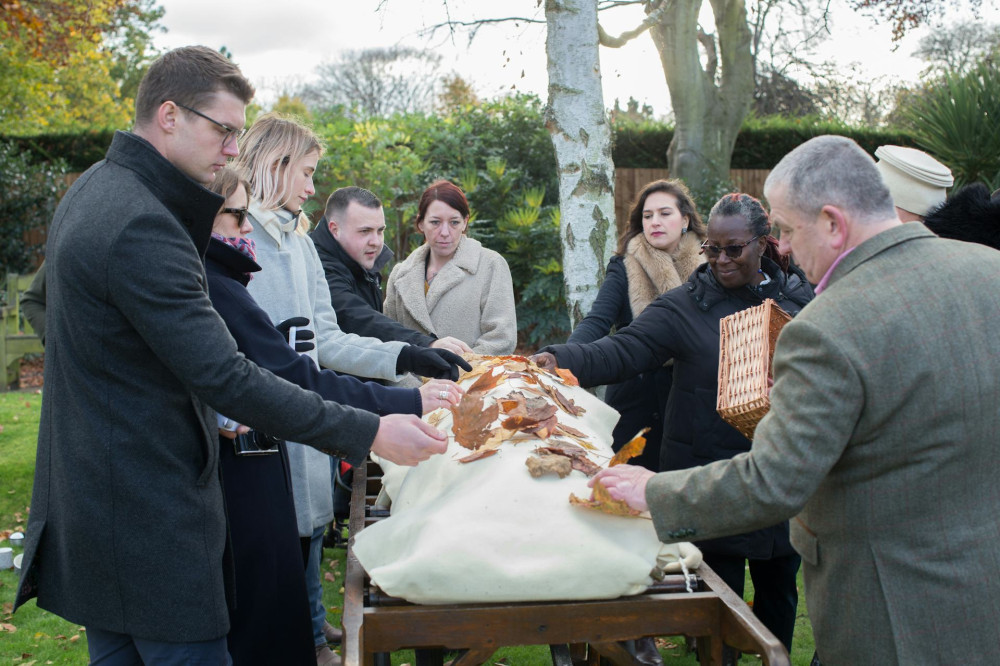
In recent years, many Americans have begun to create more personal and diverse ways to honor those they’ve lost. Beyond traditional funerals, people are holding celebration-of-life events, planting memorial trees, or creating digital spaces where memories can be shared. Some mark anniversaries by lighting candles, taking a favorite hike, or writing letters to the departed.
These evolving practices show that rituals don’t have to be religious or formal to be meaningful. They can be deeply personal acts that give structure to grief and help us express what words alone cannot.
What We Can Learn from One Another
Across cultures, rituals serve a universal purpose: they help us make sense of the incomprehensible. They give shape to emotions that might otherwise feel overwhelming and create community in moments of isolation.
By learning from the ways others honor loss, we can find new ways to let go—without erasing the love that remains. No matter where we come from, grief is part of being human. And the rituals we create are our way of saying: “You are gone, but you are still with me.”
Læs også: